
Author: admin

  • Keeping the Blues alive or frozen in time?

    “Keeping the blues alive” is often heard within blues societies, festivals and specialist media. It sounds noble but very often means keeping the blues exactly as it was.

    Instead of treating the blues as a living art form, parts of the scene turn it into a stylistic museum piece. A collection of familiar chord progressions, vintage tones and established clichés.

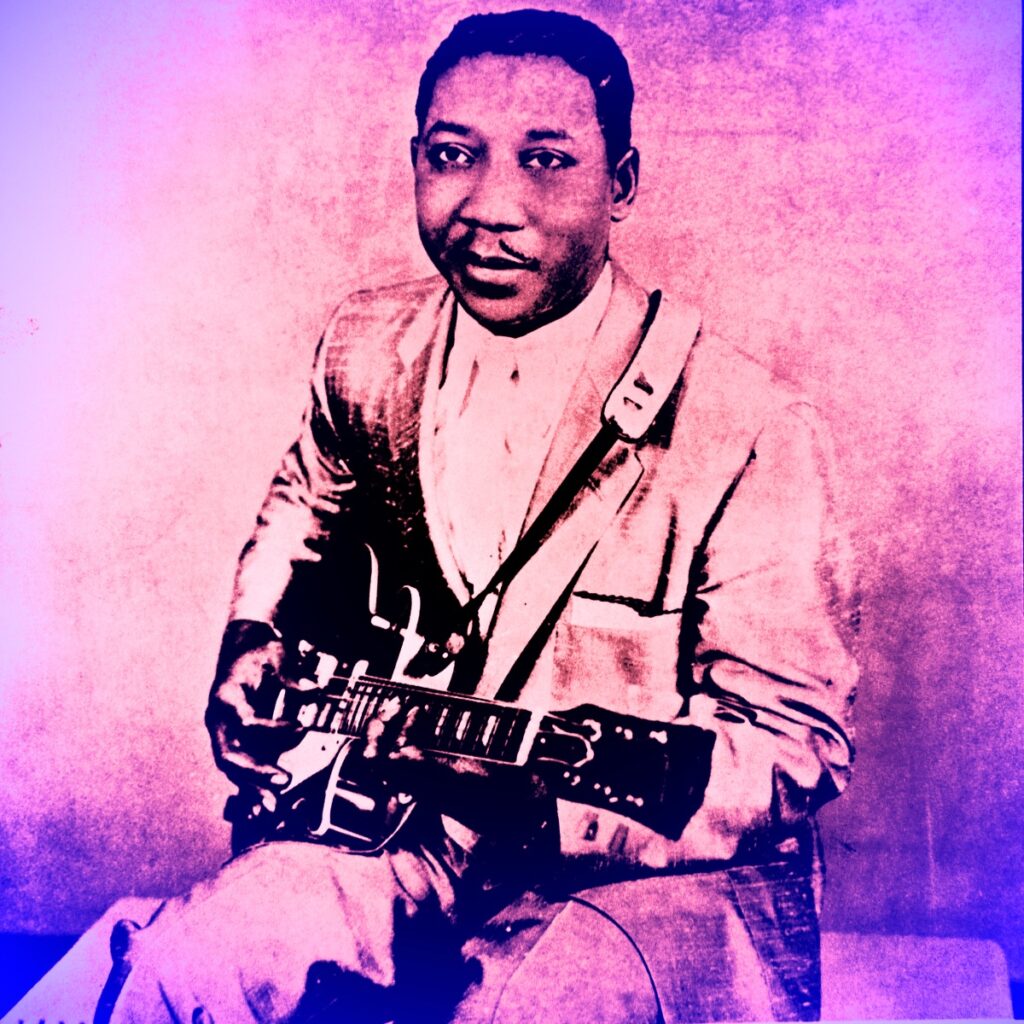
    The pioneers of the blues however were innovators. When artists like Muddy Waters and Howlin’ Wolf moved from the Mississippi Delta to Chicago, they did not preserve the acoustic Delta sound. They electrified it, making it louder, rougher and more more aggressive.

    The introduction of electric guitars and amplified harmonica on labels as Chess Records reshaped the blues completely. Without that technological leap there would have been no Chicago blues and thus no British blues explosion.

    Electricity and distortion once were considered a “modern corruption” of the blues. But today these elements are treated as the sacred tradition.

    Blues has always been more than a musical structure. It was a cultural response with coded social commentary, explicit storytelling, humor, sexuality, frustration, and critique.

    The communities that gave birth to the blues did not remain in 1930 or 1955 but they evolved. I strongly believe that if Muddy Waters or Howlin’ Wolf had emerged in the 1980s they would expressed themselves in more modern music styles.

    The cultural urgency that once shaped blues expression later found new outlets in genres like rap and hip hop. The frustration, the resistance, the commentary on inequality — those elements did not disappear but they migrated.

    For a big majority fo todays blues audiences dead legends are safer than living innovators. Icons whose styles are fixed in time cannot experiment and challenge expectations.

    Living artists, however, evolve. Musicians who incorporate loops, electronic elements, digital production techniques, or remix aesthetics into blues are often met with skepticism or even hostility.

    Amplifiers were once radical. Multi-track recording was once modern. Studio effects were once controversial.

    If the goal is truly to keep the blues alive, then the focus should not be on redoing the past with precision, but on continuing its spirit of innovation, confrontation, and cultural relevance.

  • Playlists as Long-Term Discovery Tools

    How the Bluestronica playlists evolved

    Playlists are often used as short-term promotional tools, linked to release cycles and algorithms. That makes sense. But they can also serve a different purpose. When you treat a playlist as a long-term framework, it becomes something else: a curated environment that evolves slowly and keeps its identity over time.

    For Bluestronica, that’s exactly the approach. The playlists aren’t there to push tracks aggressively. They’re there to create context.

    From pushing tracks to building context

    When I started building the Bluestronica playlists, the idea wasn’t rapid growth. It was clarity.

    What kind of sound are we talking about?
    What mood defines it?
    How much variation is possible without losing focus?

    Instead of constantly reshuffling or adding large batches of new music, I chose slow updates. Tracks stay in place longer. New additions are tested carefully. The character of a playlist should still be recognizable months later.

    Constant searching (and filtering)

    A big part of this process is ongoing discovery.

    I’m always looking for artists and tracks that genuinely fit the Bluestronica sound. That means listening through a lot of suggestions — especially those coming from Spotify’s algorithm. Some recommendations are spot on. Every now and then, a track fits perfectly — right atmosphere, right production, right energy.

    But many don’t.

    And that’s where the real work happens. Between all the algorithmic suggestions, I’m trying to find the tracks that actually resonate with me. Not just technically similar — but emotionally and artistically aligned.

    It’s also noticeable how many so-called “ghost artists” show up in recommendations. Profiles with little identity, minimal background, sometimes clearly built for streaming optimization. That doesn’t automatically make the music bad. But for these playlists, identity matters. The goal isn’t to fill slots — it’s to build something consistent.

    Slow rotation, clear identitY

    Over time, each Bluestronica playlist developed its own role.

    Some are more mood-driven. Others focus on groove or tempo. Some lean deeper into the electronic side, others stay closer to blues textures.

    A few simple principles guide the updates:

    • Slow rotation – no drastic weekly changes.
    • Coherence over volume – more tracks doesn’t automatically mean better.
    • Human filtering – the algorithm suggests, but I decide

    Organic growth instead of spikes

    This approach is slower. There are no sudden jumps because of heavy reshuffling.

    But it builds something stable.

    Listeners who save a playlist know what to expect. The algorithm also starts to understand the audience more clearly over time. Discovery still happens — just in a more gradual way. For a catalog-driven project like Bluestronica, that feels more sustainable.

    In short

    The Bluestronica playlists are not short-term promo tools. They’re long-term discovery spaces.

    They grow slowly.
    They change carefully.
    And they’re curated with intention — not just optimized for the algorithm..

    There are currently three Bluestronica playlists available:

    You can explore all three (with descriptions and embedded players) here:

  • Ghost Artists, Streaming, and Some Uncomfortable Questions

    Over the past months, while browsing Spotify and other streaming platforms, I started to notice something. Also in and around modern blues playlists.

    Every now and then I click on a track and I actually like it.It sounds good. It’s well produced. Sometimes it really works.

    But then I look a bit further.

    No interviews. No real online presence. No visible scene, no history. Just a clean profile, a short bio, and sometimes pretty high streaming numbers.

    To be clear: I’m not talking about new or young artists. Everyone starts somewhere, and new voices matter. I’m talking about profiles that feel more like projects than people.
    Many names, very similar sounds, similar release rhythms — and not much trace of an actual artist behind it.

    So the question for me becomes: what am I actually listening to?

    Is this AI-generated?
    Is this studio teams working under many different names?
    Is this just content, made to fit playlists and algorithms?

    From a business side, I kind of understand the logic. Streaming rewards volume, consistency, low costs. If you can release a lot of tracks, under many names, without touring, without building artists, without long careers to take care of — that is a very efficient model.

    And to be honest: sometimes the music is just fine. Sometimes even more than fine.

    Still, it makes me uncomfortable. Especially in blues, where identity, history and personal voice are not some extra thing — they are the music. So maybe the real question is not only what this is, but what it does.

    What kind of music world are we building if music becomes mainly “content”?
    If human presence and story become optional?
    If efficiency slowly starts to be more important than identity?

    I’m not against technology. Blues has always changed. From acoustic to electric. From field recordings to studios. From vinyl to digital. Change is part of it. But there is a difference between evolution and replacement.

    When more and more profiles seem to exist only inside the platform, I can’t help to wonder:
    Who is really behind this?
    Who benefits most from this?
    And what slowly disappears from view?

    I don’t have clear answers. For now, mostly questions. But it feels like this is something musicians, labels and listeners should at least talk about.

    Are you noticing this too? And where do you think this is going?

  • Bluestronica featured by KNKX (Seattle, USA)

    Bluestronica featured by KNKX (Seattle, USA)

    I’m proud to share that KNKX (Seattle, USA) has just published an in-depth article about the future of blues — and about my work with Bluestronica.

    In the piece, radio host John Kessler explores how blues keeps evolving and how traditional sounds can find new life through modern production, beats and remixes. He also looks at my journey from playing acoustic and electric blues to creating what I call “bluestronica”: a blend of traditional blues and contemporary rhythms.

    For me, this has always been about respect for the roots and curiosity about the future. Blues shouldn’t be kept in a museum — it should keep moving, changing and surprising people. I’m grateful that KNKX took the time to tell this story and to place it in a wider context of where blues can go next.

    You can read the full article on KNKX here:

    https://www.knkx.org/blues/2026-02-20/the-future-of-blues-nu-blues

    Many thanks to John Kessler and the KNKX team for the feature and for supporting progressive blues.

  • Midnight Sessions receives review from Hungary

    Midnight Sessions receives review from Hungary

    We’re happy to share that Midnight Sessions, the first release on our Bluestronica platform, has received a thoughtful review from Hungary on Bluesvan.hu

    The review highlights the concept behind the project: exploring the boundaries between blues-influenced music and electronic production. According to the writer, the 12-track compilation blends raw vocals and expressive guitar work with downtempo beats, lo-fi textures and subtle hip-hop rhythms, resulting in an intimate listening experience rather than a dancefloor-focused record.

    The artists on the album are described as operating on the line between tradition and experimentation. While the emotional core of the blues remains clearly present, it is reinterpreted through modern techniques and electronic arrangements.

    One line from the review captures the spirit of the project particularly well:
    “Ahol a blues lelke és az elektronika jövője találkozik.”
    (“Where the soul of the blues meets the future of electronic music.”)

    We’re grateful to see Bluestronica and idnight Sessions resonating beyond borders, and we appreciate the careful listening and words from the Hungarian press.

  • Why I started curating Bluestronica

    Over the years, I’ve worked with a large blues-oriented catalog, spanning different eras, artists, and production styles. One thing became increasingly clear: strong material doesn’t disappear — it often just loses context.

    Bluestronica started as an attempt to create a new listening framework for part of that catalog. Not to modernize or rebrand the music, but to place it in a context where mood, groove, and atmosphere guide discovery.

    By curating rather than releasing new music, the focus shifts from output to perspective. It’s about how existing recordings can still resonate when presented thoughtfully — without chasing trends or short-term attention.

    If you’re curious how this sounds in practice, you can listen here

  • The Groove Edition: Bluestronica Goes Deeper

    The Groove Edition: Bluestronica Goes Deeper

    The third Bluestronica playlist has landed on Spotify, and this one is all about one thing: groove. Bluestronica Grooves explores the meeting point between classic blues energy and modern electronic rhythms, wrapped in a mid-tempo, hook-driven selection of tracks that flows effortlessly from day into night.

    This is blues you can move to — not in a flashy way, but in that head-nodding, body-swaying way where rhythm and feel do the heavy lifting. The focus here is on groove-based arrangements, tight rhythms, and clear, catchy hooks. The guitars still tell their stories, but they’re supported by beats and electronic textures that push the music into a contemporary space.

    What makes this playlist special is the balance: raw emotion on one side, modern production on the other. You’ll hear tracks that respect the tradition of the blues while confidently stepping into new territory. It’s perfect for listeners who love the soul of blues but also crave the pulse and repetition of electronic music.

    Bluestronica Grooves is made for a wide audience — for focused listening, for background vibes, or for setting the tone during the evening. It’s smooth, rhythmic, and deeply addictive in that slow-burn way. If you’re curious about where blues meets the future, this playlist is your next

  • Bluestronica: Midnight Sessions — after-hours blues for late-night listening

    When the night gets quiet and the lights are low, a different kind of music starts to make sense. Bluestronica: Midnight Sessions was created for those moments.

    This first Bluestronica compilation explores the darker, after-hours side of blues-influenced electronic music. Across the selection, raw blues vocals and expressive guitars merge with downtempo beats, lo-fi textures and subtle hip-hop rhythms. The result is not a club-focused release, but an intimate listening experience — slow, moody and immersive.

    Midnight Sessions brings together artists who operate in the space between tradition and experimentation. The blues remains at the core, but it is reshaped through modern production, electronics and understated grooves. Each track contributes to a cohesive late-night atmosphere, moving effortlessly between electronic blues, alternative blues and downtempo soundscapes.

    Bluestronica is a platform dedicated to contemporary blues hybrids, highlighting music that stretches the genre beyond its usual boundaries while staying rooted in its emotional depth. Midnight Sessions marks the first chapter of this project and sets the tone for future releases.

    For listeners who prefer high-quality audio and album-focused platforms, this release is also available on Qobuz.

    🎧 Listen to Bluestronica: Midnight Sessions here

  • Why Blues and Electronic Music Are a Natural Combination

    At first glance, blues and electronic music might seem to come from completely different worlds. One is rooted in tradition, the other in technology. Yet when you listen more closely, the distance between them becomes surprisingly small.

    Both are built around groove, repetition, and the subtle art of creating emotion through minimal means. In different ways, they use rhythm, texture and timing not just to entertain, but to shape mood, movement and state of mind.

    1. Groove Before Virtuosity
      In both blues and electronic music, groove matters more than technical display. It’s not about how many notes you play, but about where you place them — and how they make the listener move, physically or mentally. A simple phrase, played with the right feel, often says more than a cascade of notes.
    2. Repetition as a Creative Force
      The twelve-bar blues and the electronic loop share the same DNA: repetition as a framework for expression. Small changes, subtle shifts in timing, tone or texture, can completely transform the emotional impact of a piece. Repetition here is not limitation, but focus.
    3. Riffs, Loops and Cycles
      Blues is built on riffs and cycles; electronic music is built on loops and patterns. Different tools, same principle: a repeating structure that invites variation, tension and release. In both cases, the listener is drawn into a circular movement rather than a straight line.
    4. Call and Response
      Call and response is one of the oldest principles in blues, but it also lives on in electronic music — between beat and bass, between sample and synth, between tension and release. It’s a conversation inside the music, a constant play of question and answer.
    5. The Voice as Emotional Anchor
      Whether it’s a raw blues vocal or a fragmented, processed sample, the human voice often remains the emotional center. Even when technology reshapes it, the voice keeps the music grounded in human experience — a reminder that feeling comes before format.
    6. Hypnosis, Trance and Time
      Both traditions understand the power of repetition to alter perception. A strong blues groove or a steady electronic pulse can create a trance-like state, where time seems to stretch and the listener sinks deeper into the sound. The music becomes less about progression and more about immersion.
    7. Tradition, Technology and Evolution
      Blues has never been static, and electronic music has never existed without roots. In both, technology is not the enemy of feeling — it is simply another way of extending it. New tools don’t replace expression; they reshape how it is carried forward.

    Closing
    Blues and electronic music are not opposites. They are different expressions of the same instinct: to use rhythm, repetition and sound to tell human stories — with whatever tools are available at the time.

  • Why Bluestronica Lives Outside Social Media

    For years, I spent a lot of time on platforms like Facebook and Twitter, trying to support music projects, share work and stay visible.
    I put in the effort — but in the end, I rarely felt it led to deeper listening or meaningful connection.

    What did grow was noise, distraction and the pressure to keep posting.

    Bluestronica grew from a different need. A need for space, attention and time — for music to unfold without having to compete for clicks.

    Stepping away from social media wasn’t a protest. It was a conscious decision to focus on places and people where music comes first.

    This site is one of those places.