Author: admin

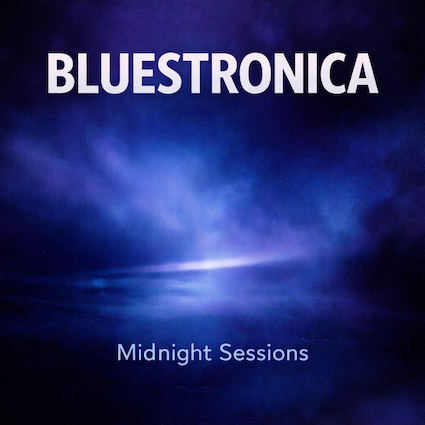
  • Bluestronica: Midnight Sessions — after-hours blues for late-night listening

    When the night gets quiet and the lights are low, a different kind of music starts to make sense. Bluestronica: Midnight Sessions was created for those moments.

    This first Bluestronica compilation explores the darker, after-hours side of blues-influenced electronic music. Across the selection, raw blues vocals and expressive guitars merge with downtempo beats, lo-fi textures and subtle hip-hop rhythms. The result is not a club-focused release, but an intimate listening experience — slow, moody and immersive.

    Midnight Sessions brings together artists who operate in the space between tradition and experimentation. The blues remains at the core, but it is reshaped through modern production, electronics and understated grooves. Each track contributes to a cohesive late-night atmosphere, moving effortlessly between electronic blues, alternative blues and downtempo soundscapes.

    Bluestronica is a platform dedicated to contemporary blues hybrids, highlighting music that stretches the genre beyond its usual boundaries while staying rooted in its emotional depth. Midnight Sessions marks the first chapter of this project and sets the tone for future releases.

    For listeners who prefer high-quality audio and album-focused platforms, this release is also available on Qobuz.

    🎧 Listen to Bluestronica: Midnight Sessions here

  • Why Blues and Electronic Music Are a Natural Combination

    At first glance, blues and electronic music might seem to come from completely different worlds. One is rooted in tradition, the other in technology. Yet when you listen more closely, the distance between them becomes surprisingly small.

    Both are built around groove, repetition, and the subtle art of creating emotion through minimal means. In different ways, they use rhythm, texture and timing not just to entertain, but to shape mood, movement and state of mind.

    1. Groove Before Virtuosity
      In both blues and electronic music, groove matters more than technical display. It’s not about how many notes you play, but about where you place them — and how they make the listener move, physically or mentally. A simple phrase, played with the right feel, often says more than a cascade of notes.
    2. Repetition as a Creative Force
      The twelve-bar blues and the electronic loop share the same DNA: repetition as a framework for expression. Small changes, subtle shifts in timing, tone or texture, can completely transform the emotional impact of a piece. Repetition here is not limitation, but focus.
    3. Riffs, Loops and Cycles
      Blues is built on riffs and cycles; electronic music is built on loops and patterns. Different tools, same principle: a repeating structure that invites variation, tension and release. In both cases, the listener is drawn into a circular movement rather than a straight line.
    4. Call and Response
      Call and response is one of the oldest principles in blues, but it also lives on in electronic music — between beat and bass, between sample and synth, between tension and release. It’s a conversation inside the music, a constant play of question and answer.
    5. The Voice as Emotional Anchor
      Whether it’s a raw blues vocal or a fragmented, processed sample, the human voice often remains the emotional center. Even when technology reshapes it, the voice keeps the music grounded in human experience — a reminder that feeling comes before format.
    6. Hypnosis, Trance and Time
      Both traditions understand the power of repetition to alter perception. A strong blues groove or a steady electronic pulse can create a trance-like state, where time seems to stretch and the listener sinks deeper into the sound. The music becomes less about progression and more about immersion.
    7. Tradition, Technology and Evolution
      Blues has never been static, and electronic music has never existed without roots. In both, technology is not the enemy of feeling — it is simply another way of extending it. New tools don’t replace expression; they reshape how it is carried forward.

    Closing
    Blues and electronic music are not opposites. They are different expressions of the same instinct: to use rhythm, repetition and sound to tell human stories — with whatever tools are available at the time.

  • Why Bluestronica Lives Outside Social Media

    For years, I spent a lot of time on platforms like Facebook and Twitter, trying to support music projects, share work and stay visible.
    I put in the effort — but in the end, I rarely felt it led to deeper listening or meaningful connection.

    What did grow was noise, distraction and the pressure to keep posting.

    Bluestronica grew from a different need. A need for space, attention and time — for music to unfold without having to compete for clicks.

    Stepping away from social media wasn’t a protest. It was a conscious decision to focus on places and people where music comes first.

    This site is one of those places.

  • Welcome to Bluestronica – The Story Behind the Project

    Welcome to the very first post on Bluestronica.

    If you’re reading this, you’ve just arrived at a project that has actually been in the making for most of my life.

    I started playing guitar when I was fourteen. Back then I had no idea that music would shape my entire future – as a musician, producer, promoter, label owner and lifelong blues enthusiast. Over the decades I’ve been involved in countless concerts, recordings and collaborations across the European blues scene.

    Through all those years one thing never changed:
    my deep love for the blues.

    Why Bluestronica

    At some point I realized something important.

    Traditional blues has incredible power and emotion, but the way we listen to music has changed. Technology changed. Production changed. The musical world around the blues kept moving forward.

    Instead of seeing that as a threat, I started seeing it as an opportunity.

    What would happen if the feeling of the blues met the possibilities of electronic music?
    If old guitars could live together with modern beats?
    If roots music could be remixed, reshaped and reimagined?

    That question slowly grew into an idea.

    And that idea became Bluestronica.

    Why Spotify

    These days Spotify has become the main platform where music lives and breathes. That’s why Bluestronica will focus mainly on Spotify playlists and compilations.

    Instead of releasing traditional albums only, I now enjoy creating musical journeys in playlist form – constantly evolving, changing and growing.

    For me, playlists are like modern mixtapes:
    personal, flexible and always open for new discoveries.

    What you can expect ?

    On this website I will share:

    • new playlists and updates
    • Bluestronica compilations
    • remixes and productions
    • stories behind the music
    • thoughts about blues, technology and creativity

    It won’t be a traditional blog with daily posts. Only when there is something real to share.

    Keeping Living Music Alive

    Throughout all my years in music I’ve always believed in one simple idea:

    Music should stay alive and keep moving forward. Bluestronica is my way of doing exactly that – respecting the roots while exploring new directions.

    Thanks for visiting, thanks for listening, and welcome to the journey.